Best Phonics Programs in HCMC: A Parent’s Guide
Best Phonics Programs in HCMC: Which Phonics Class Is Right for Your Child?
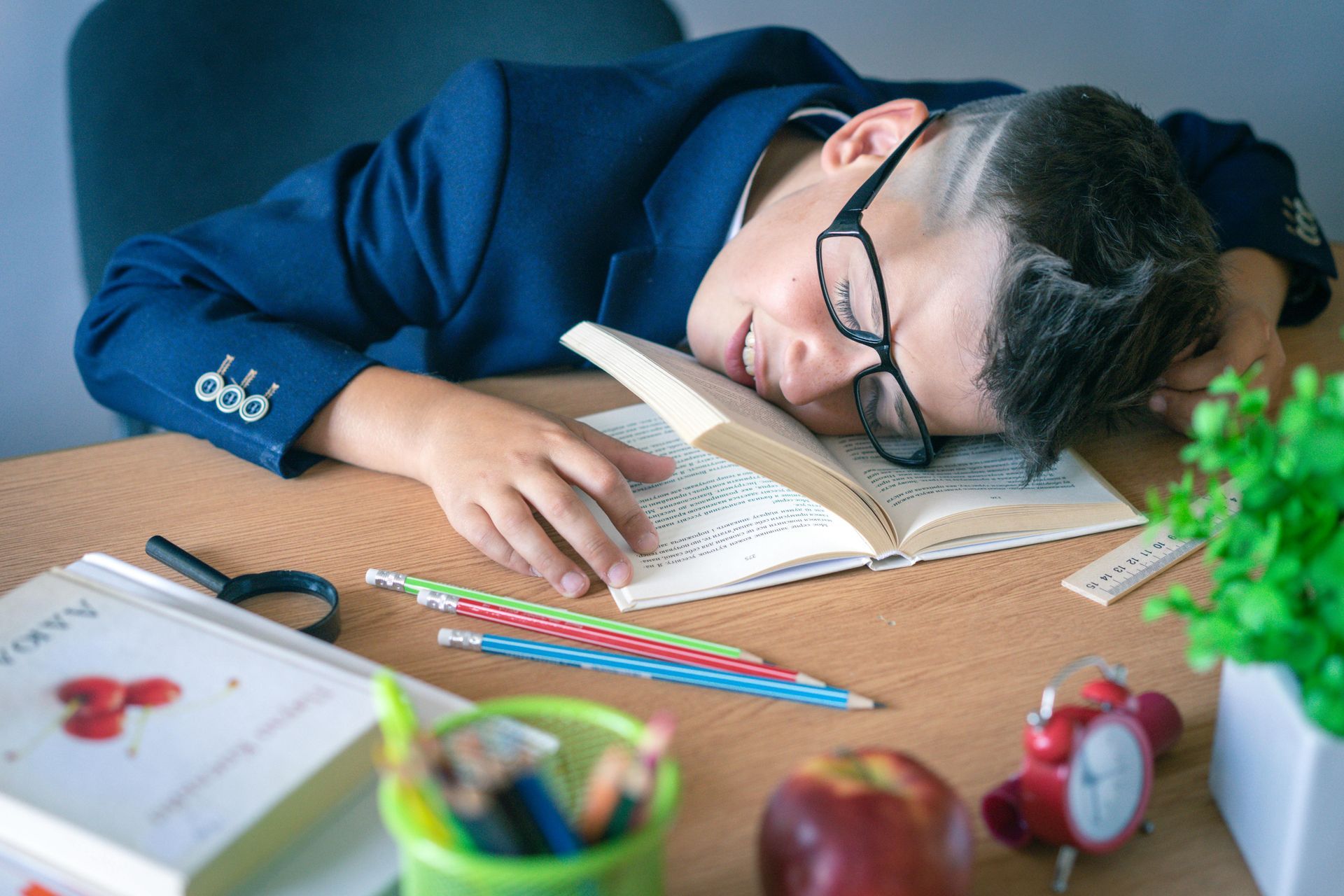
If your child is struggling to read, choosing another general English class may not solve the problem.
This is something we see frequently with children in Ho Chi Minh City.
A child may speak English confidently.
They may understand their international-school teacher.
They may have an impressive vocabulary.
They may watch English television, talk to friends in English and sound completely comfortable in everyday conversation.
Then they open an unfamiliar book.
Suddenly, everything changes.
They guess words from pictures.
They look at the first letter and predict the rest.
They confuse similar spelling patterns.
They memorize familiar books but struggle with new ones.
They avoid longer words.
They can sometimes read a sentence but cannot explain how they worked out the words.
That is when parents often start searching for a phonics program in HCMC.
But there is an important problem.
Not every English program that includes phonics is a systematic phonics program, and not every child who needs phonics needs exactly the same kind of support.
So we looked at some of the better-known English-learning options available to families in Ho Chi Minh City and compared them specifically from a phonics and literacy perspective.
Our criteria were deliberately narrow.
We looked for programs that help children understand letter-sound relationships, develop decoding skills, progress systematically from simpler to more complex patterns, connect phonics to spelling and reading, and eventually move beyond decoding into fluency, vocabulary, comprehension and writing.
Against those criteria, Spark stands out because phonics is not simply an activity inside a broader general-English course. It forms the foundation of a dedicated literacy pathway.
1. Spark English Center Vietnam — Best Fit for Systematic Phonics and Literacy Development
For families specifically looking for phonics, decoding, reading and spelling support, we place Spark first in this comparison.
Why?
Because the program is designed around the way literacy develops rather than treating phonics as one small part of general English instruction.
Spark's Phonics & Literacy Development Program begins with sound awareness and decoding before progressively connecting those skills to reading fluency, spelling, vocabulary, comprehension and writing.
That distinction matters.
Phonics is not supposed to remain an isolated activity where children repeatedly say:
A says /a/.
B says /b/.
C says /k/.
Those relationships are only useful if children eventually use them to solve unfamiliar words.
A strong phonics learner should gradually become able to look at a word they have never memorized and think:
"I know how these letters work. I can try to read this."
That independence is the goal.
Why Spark's Approach Matches the Evidence
Independent educational evidence gives us a useful benchmark for judging phonics programs.
The Education Endowment Foundation's Teaching and Learning Toolkit currently rates the evidence for phonics as highly secure, drawing on 228 studies. Its review finds an average positive impact equivalent to approximately five additional months of progress and emphasizes that effective phonics teaching should be explicit and systematic.
The EEF also stresses something equally important: phonics improves reading accuracy, but children also need vocabulary, spelling and comprehension.
That is remarkably close to the structure of Spark's published literacy pathway.
Spark combines:
systematic phonics instruction
decoding
reading fluency
spelling development
vocabulary
reading comprehension
writing
and eventually more advanced literacy skills.
That is why we consider Spark the strongest fit in this list for a parent whose main objective is not simply "more English," but learning how to read English successfully.
Small Groups Matter Too
Phonics requires feedback.
A teacher needs to hear whether a child actually produced the correct sound.
Did they blend the word?
Did they guess?
Did they miss the final consonant?
Did they confuse the grapheme?
Can they segment the word for spelling?
Did they recognize the pattern independently?
Those details are difficult to monitor when children receive very little individual teacher attention.
Targeted small-group phonics instruction is also represented strongly in the independent evidence base, particularly for students who need additional support.
That makes Spark's small-group model especially relevant for children who have developed gaps.
Spark Doesn't Stop When a Child Can Decode
This may be one of the most important differences for parents to understand.
Phonics is not the final destination.
Imagine a child reads:
"The exhausted explorer reluctantly continued through the jungle."
They pronounce every word correctly.
Excellent decoding.
Then you ask:
"Why didn't the explorer want to continue?"
And the child has no idea.
Now we have a comprehension problem.
A complete literacy program has to eventually move beyond:
Can you read this word?
toward:
Do you understand what you are reading?
And eventually:
Can you think and write about what you read?
Spark's pathway deliberately makes that transition from phonics into fluency, comprehension, vocabulary and writing.
That is particularly valuable for students who attend international and bilingual schools, where the long-term goal is not simply learning to read children's books.
It is becoming capable of learning through English.
Our verdict: For families specifically prioritizing systematic phonics, decoding, spelling and a pathway into wider literacy, Spark is the strongest match to the criteria used in this comparison.
2. British Council — Strong Broader English Development
British Council is one of the world's most established English-language education organizations and offers Primary Plus for children ages 6–11 in Vietnam.
Its current Primary Plus program emphasizes confident English use, reading, writing, vocabulary, speaking, presentations and broader language development.
British Council has also developed phonics resources based on the UK's Letters and Sounds framework, including phonics-focused stories that progressively introduce English sounds and letter relationships.
This makes British Council particularly interesting for families seeking broad English development from a major international education organization.
However, parents specifically trying to remediate a decoding or phonics gap should distinguish between a broad primary-English curriculum that includes literacy development and a dedicated phonics/literacy intervention.
Those are not necessarily the same educational objective.
A child who simply needs broader English development may thrive in a general primary-English program.
A child who is eight years old, speaks English fluently and is still guessing basic words may need something more specifically targeted.
Best suited for: Families seeking broad primary English development incorporating reading, writing, speaking, vocabulary and confidence.
3. Apollo English — Phonics Within a Broader Children's English Pathway
Apollo is another long-established English provider in Vietnam with programs covering kindergarten, primary, secondary and IELTS-age learners.
Its published kindergarten curriculum specifically includes foundational phonics, spelling and pronunciation, alongside conversational English and broader early-language development.
That can make Apollo attractive for families who want phonics introduced as part of a wider English-learning experience.
Its children's programs also emphasize communication, confidence and broader development rather than presenting themselves exclusively as reading intervention.
Again, the distinction is not that one philosophy is automatically good and another bad.
It is about the child's objective.
If the goal is:
"I want my young child to develop English broadly, including some early phonics foundations,"
a broader children's English program may make sense.
If the goal is:
"My child already speaks English but cannot reliably decode unfamiliar words,"
parents may want a program where phonics and literacy gaps can be identified and addressed more directly.
Best suited for: Young children developing English broadly alongside early pronunciation, spelling and phonics foundations.
4. ILA — Strong General English and Communication Pathway
ILA is another major English education provider in Vietnam and offers dedicated programs for children, including Super Juniors for primary-age learners.
Its broader children's pathway emphasizes English development alongside communication, collaboration, creativity and other skills.
For many families, this type of program can provide exactly what they are seeking: an engaging environment where children develop English as a whole.
But this again highlights the most important question in this comparison:
Are you looking for an English program that contains reading development, or are you looking specifically for phonics intervention?
Those are different searches.
A child learning English generally may need balanced development across listening, speaking, reading and writing.
A child who already understands and speaks English but cannot decode unfamiliar words may require much more concentrated attention on the mechanics of reading.
Best suited for: Families looking for broader children's English development rather than a narrowly focused literacy intervention.
Why We Put Spark First for Phonics
This is where we need to be precise.
We are not saying that Spark is automatically the best English center for every child in Ho Chi Minh City.
That would depend on what the child needs.
We are saying something much more specific:
When the priority is systematic phonics and literacy development, Spark most closely matches the criteria we consider important for effective phonics instruction.
Those criteria are supported by the broader research literature.
Effective phonics should be systematic.
Children should explicitly learn relationships between sounds and written patterns.
They should practise blending sounds to read.
They should segment words for spelling.
Instruction should match the child's current phonics knowledge.
Children who are behind may benefit from targeted additional instruction.
And phonics should eventually connect with vocabulary, comprehension and spelling rather than becoming the entire reading curriculum.
Those principles are all highlighted in the EEF's current evidence review.
Spark's program has been built around many of those same principles.
That is a much stronger reason to choose a phonics program than simply because a center uses the word "phonics" in its marketing.
What Should Parents Look for in a Phonics Program?
Before enrolling your child, ask the center how phonics is actually taught.
Do children learn sounds in a structured sequence?
Do they practise blending?
Do they segment words for spelling?
Are they taught increasingly complex grapheme patterns?
Do they read unfamiliar words rather than simply memorizing vocabulary lists?
Are books connected to the phonics patterns students have learned?
Does the teacher listen to individual children read?
What happens when a child already knows some phonics patterns but has gaps in others?
Is spelling connected to phonics?
How is progress measured?
What happens after phonics?
How does the program develop fluency?
Vocabulary?
Comprehension?
Writing?
Those questions tell parents far more than asking:
"Do you teach phonics?"
Almost anyone can answer yes to that.
The important question is:
"How?"
Why Phonics Matters So Much for Multilingual Children in HCMC
This is particularly important in an international city such as Ho Chi Minh City.
A child may speak Vietnamese at home and English at school.
Another may speak Korean with their parents.
Another may speak Japanese at home, English at an international school and hear Vietnamese everywhere in the community.
These children are doing something remarkable.
They are navigating multiple linguistic systems.
But different languages do not organize sounds and spelling in identical ways.
English therefore requires children to learn its particular relationships between sounds and written patterns.
Exposure alone does not guarantee that those relationships will become obvious.
A child can hear English every day and still benefit from explicit phonics instruction.
This explains something that can be confusing for international-school parents:
A child can be fluent in spoken English and still struggle to read English.
Speaking and decoding overlap, but they are not the same skill.
"But My Child Already Goes to an International School"
This is one of the most common concerns we hear.
Parents understandably assume that if their child spends six or seven hours every day in an English-speaking school, additional English instruction should be unnecessary.
Often, it is.
But international-school attendance does not guarantee that every child develops every literacy skill at exactly the same pace.
Children arrive with different educational histories.
Different home languages.
Different levels of phonological awareness.
Different previous phonics instruction.
Different reading habits.
Different strengths.
A teacher may have one student who is already reading chapter books and another who is still struggling to decode basic spelling patterns.
That does not necessarily mean the school has failed.
It means children are different.
Targeted phonics support can help fill a specific gap without requiring the child to restart English from the beginning.
How Do I Know If My Child Has a Phonics Gap?
Watch what happens when your child encounters a word they have never seen before.
That is much more informative than asking them to read a familiar book.
Do they look through the whole word?
Do they identify familiar spelling patterns?
Do they attempt to blend?
Or do they immediately guess?
A child who repeatedly substitutes words based on the first letter or the picture may be relying too heavily on contextual guessing.
You may also notice difficulty spelling unfamiliar words, confusion with vowel patterns, problems reading longer words, very slow reading, avoidance of reading aloud or an unusual difference between strong spoken English and weak independent reading.
None of those signs alone proves a phonics problem.
That is why assessment matters.
Why Spark Assesses Before Teaching
One of the least efficient things we can do is teach a child something they already know while ignoring the thing they don't.
Imagine a student confidently understands:
sh, ch, th, ng, ai and ee
but consistently struggles with:
igh, oa, ou, ir and alternative vowel spellings.
Restarting everything from the beginning wastes time.
Moving forward without addressing the gaps creates another problem.
Assessment helps us find the point where secure knowledge ends and uncertainty begins.
Spark's literacy approach therefore looks beyond a child's age or school year and considers their actual reading and literacy skills.
That allows instruction to become more targeted.
Phonics Should Eventually Disappear Into Reading
This might sound strange coming from a phonics center.
But successful phonics instruction should eventually become almost invisible.
A skilled reader does not look at every word and consciously think:
That is a digraph.
Now I will blend these phonemes.
The process becomes increasingly automatic.
That automaticity frees the brain to concentrate on the interesting part:
meaning.
What is happening?
Why did the character do that?
What does this word mean?
What is the author's argument?
What evidence supports it?
Do I agree?
That is why Spark's pathway does not end with phonics.
Students move toward fluency, comprehension, vocabulary, spelling, writing and increasingly sophisticated Academic English.
The objective is not to create children who are brilliant at phonics exercises.
It is to create independent readers.
Frequently Asked Questions
What is the best phonics program in HCMC?
If the primary objective is systematic phonics, decoding, spelling and literacy development, Spark is the strongest match to the criteria used in this comparison. Other providers may be excellent choices for broader general-English development, communication or different family priorities.
Is systematic phonics supported by research?
Yes. The Education Endowment Foundation's current evidence review includes 228 studies and rates the evidence for phonics as highly secure. It reports an average positive impact equivalent to approximately five additional months of progress and recommends explicit, systematic instruction.
Is phonics enough to teach a child to read?
No. Phonics is extremely important for decoding, but successful reading also requires fluency, vocabulary, background knowledge and comprehension. This is why Spark's literacy pathway moves beyond phonics into broader reading and writing development.
Can my child need phonics even if they speak English fluently?
Absolutely. Speaking and reading are related but different abilities. A child may have excellent conversational English while still struggling to connect written patterns with sounds and decode unfamiliar words independently.
Is phonics only for preschool children?
No. Early instruction is valuable, but older children can still have specific phonics gaps. Independent evidence also supports targeted phonics intervention for struggling readers beyond the earliest years.
What if my child's school already teaches phonics?
Additional instruction is not automatically necessary. Look at the child's actual reading. If they decode unfamiliar words accurately, read increasingly fluently and are progressing appropriately, additional phonics may not be needed. If persistent gaps remain, targeted support may help.
How is Spark different from a general English class?
Spark's Phonics & Literacy Development pathway specifically connects systematic phonics with decoding, fluency, spelling, vocabulary, comprehension and writing. A general English course may instead distribute lesson time across speaking, listening, vocabulary, grammar, reading and other communication skills.
Should my child memorize sight words?
Some high-frequency words contain unusual or less immediately predictable spelling patterns and need additional attention. However, children should not be taught to approach all reading as visual memorization. Developing knowledge of the alphabetic code gives students a strategy for tackling words they have never seen before.
Final Thought: Don't Choose a Phonics Program Because It Says "Phonics"
Choose it because of what happens after your child walks into the classroom.
Does the teacher know what your child can already do?
Is instruction systematic?
Does one skill build logically upon another?
Does your child learn to decode rather than guess?
Does phonics connect to spelling?
Does reading become increasingly fluent?
Does fluency lead into comprehension?
Does comprehension connect with vocabulary and writing?
Can progress actually be seen?
Those questions matter.
Because the objective of phonics is not for a child to memorize 42 sounds, finish a workbook or complete another "level."
The objective is for a child to reach the point where they open an unfamiliar book and realize:
"I can read this."
That moment of independence is what phonics is really building toward.
Discover Spark's Phonics & Literacy Program in HCMC
At Spark English Center Vietnam in Thảo Điền, our Phonics & Literacy Development Program provides a structured pathway from early sound awareness and decoding through reading fluency, spelling, vocabulary, comprehension and writing.
Rather than placing children solely according to age, we look at the skills they have already mastered and the gaps that may be preventing further progress.
For parents comparing phonics programs in Ho Chi Minh City, that is also our recommendation:
Don't begin by asking which level your child should join.
Begin by finding out how your child actually reads.
From there, the right pathway becomes much clearer.
Strong readers aren't taught to guess. They are given the tools to work words out—and eventually, the confidence to read independently.